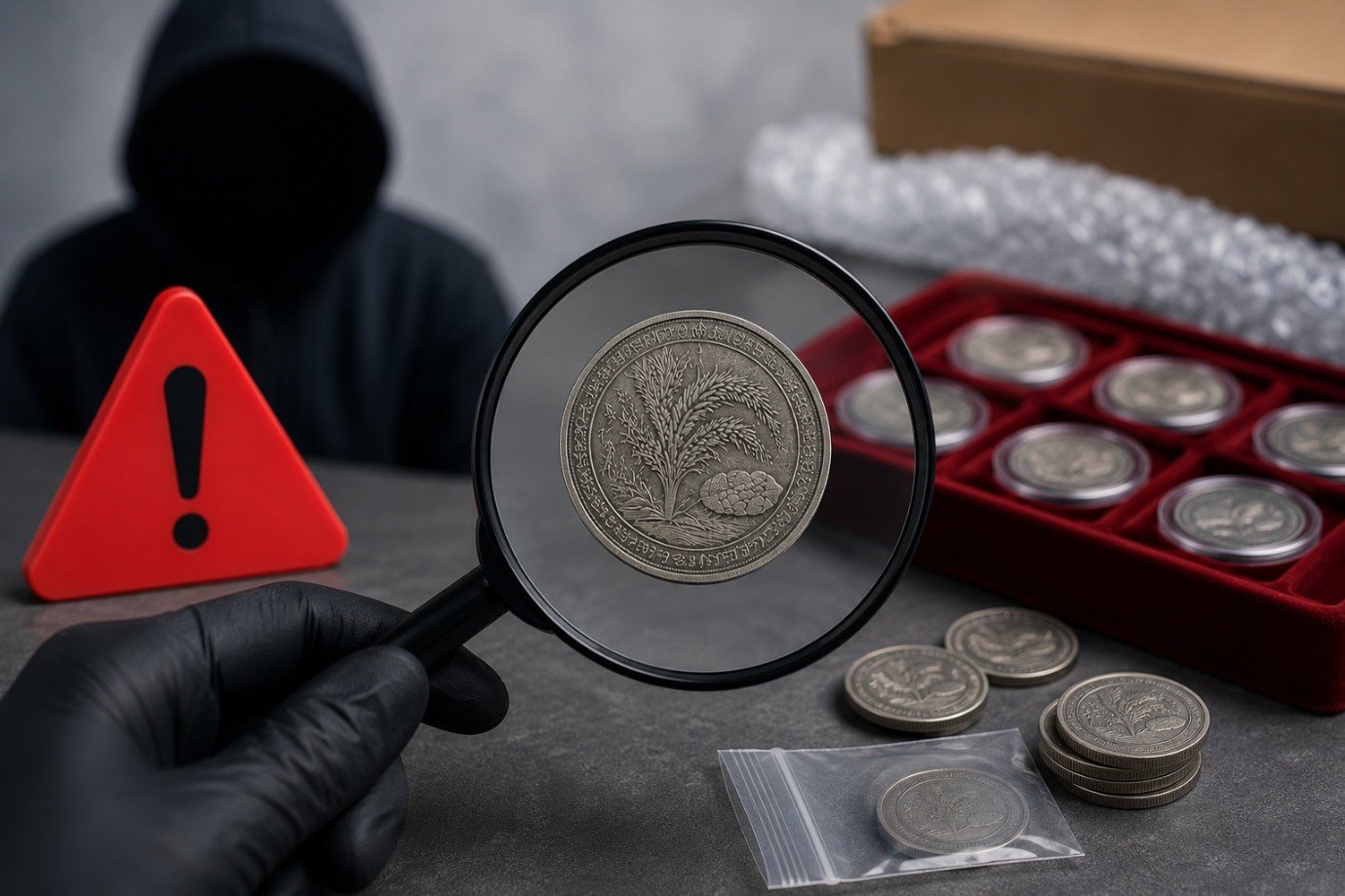
The growth of online marketplaces has facilitated easier trading of rare collectibles, but it has also allowed for scammers to take advantage of the system. The most common type of scam involves a chemical coin scam, whereby scammers advertise normal coins using false claims that these coins possess certain chemicals or magnetic properties.
Through the increase in consumer fraud awareness, consumers are able to recognize misleading statements and prevent themselves from suffering financial loss.
What Is a Chemical Coin Scam?
The concept of the chemical coin scam is based on the fact that some vendors will claim that there are unique qualities in particular ancient coins. The sellers will tell you that such coins have special properties that allow them to attract rice, generate energy, or have unusual chemistry that makes them incredibly expensive.
These claims are not scientifically proven or credible at all and are used to lure buyers into spending huge sums of money.
Common Warning Signs of Fake Chemical Coin Sellers
Recognizing suspicious behavior is the best way to avoid becoming a victim.
1. Unrealistic Profit Promises
The one key indicator that a chemical coin scam may occur is when profits are promised to a prospective buyer. Such sellers tend to assure buyers that their coins will become highly valuable in the near future.
Legitimate investments do not guarantee huge profits.
2. Fake Scientific Demonstrations
The scammers will also perform demonstrations involving coins that attract rice or have other peculiar reactions to them. Such demonstrations can be performed using magnets or through other misleading tricks.
Remember always to depend on scientific confirmation rather than demonstrations from the sellers.
3. High-Pressure Sales Tactics
The fraudster usually mentions that there are only a few chances left or some other buyer is interested in buying the coin.
Making the buyer feel urgent about the transaction is a tactic that is normally used in the chemical coin scam.
4. Fake Certificates
It is common for some sellers to show lab reports and certificates that look authentic. Most of these reports and certificates have either fake logos or signatures or names of non-existent institutions.
Always verify all certificates before relying on them.
5. Secret Buyer Claims
Another frequent method is the claim that foreign firms or departments of the government are ready to pay vast sums of money for these coins in total secrecy.
These statements are hard to prove, so they should be considered carefully.
Misleading Claims Used by Fraudsters
Fake sellers often repeat similar statements to make their offers sound convincing.
- The coin contains rare chemicals unavailable elsewhere.
- The coin generates electricity naturally.
- Scientists have confirmed extraordinary properties.
- Government agencies are secretly purchasing these coins.
- International buyers are waiting to pay enormous prices.
These claims are rarely supported by reliable evidence.
How Scammers Build Trust
Fraudsters often try to appear credible before asking for money.
Professional Websites
A professional-looking website is no proof of authenticity in itself. Many scams use high-quality designs to look legitimate.
Fake Testimonials
Customer testimonials, pictures, and video clips may be false or even taken from somewhere else altogether.
Social Media Promotion
Several fake users may continually recommend the same dealer, thus giving him an air of popularity.
Emotional Stories
The majority of sellers often mention that the coins were obtained through inheritance from the family or discovery.
How to Protect Yourself
Strong consumer fraud awareness can significantly reduce your chances of becoming a victim.
Research Carefully
Never depend only on what is said by the vendor. Cross-check the information against reliable scientific sources and independent experts.
Verify Documents
The authenticity of documents should be verified by checking them from the source.
Avoid Advance Payments
It is wise to be wary if the seller asks for payment before proving the item’s genuineness.
Ask Questions
True sellers will respond to your questions and give detailed information. Unresponsive answers should raise red flags.
Consult Experts
Coin experts and numismatists certified by their profession can provide valuable assistance before making a decision.
Why Consumer Fraud Awareness Matters
Enhancing consumer fraud awareness enables one to detect misleading advertisements, doubt incredible claims, and ensure accuracy of information before committing to any form of finance.
Consumer awareness also ensures responsible consumption behaviors and minimizes chances of being deceived by complex fraud. Sharing accurate information with friends and relatives can protect them from fraud.
Conclusion
Preventing yourself from falling victim to the chemical coin scam entails doing proper research. It is good to be wary of exaggerated profits, false demonstrations, unverified certificates, and excessive pressure. Proper research will help prevent any losses due to ignorance.
Being informed about this situation will be your best form of protection, which is why Original Chemical Rice Puller urges consumers to conduct research first.
FAQs
1. What is a chemical coin scam?
A chemical coin scam entails making false assertions about some coins having unique chemical value to deceive people into buying them at very high prices.
2. How can I identify fake chemical coin sellers?
Look for exaggerated profits, fictitious certificates, hurried buying, demonstrations, and unverifiable claims from independent or scientific sources.
3. Are rice pulling coin claims scientifically proven?
The majority of claims about rice pulling and chemical coins do not have any scientific evidence to back up their credibility. You must always consult an independent expert opinion prior to any purchase or investment.
4. Why is consumer fraud awareness important?
Improved knowledge about consumer fraud enables consumers to detect fraudsters, verify information, and refrain from sustaining losses at the hands of such fraudsters.
5. What should I do if I suspect a chemical coin scam?
Avoid communicating with the seller and making payments; keep all the evidence that you can collect and inform the appropriate authorities about the case.